Since 2019

We started because the good stuff kept disappearing.

Every year there was less open-pan jaggery in the market and more of the pale, sulphured substitute. indiGUD exists to keep the older method commercially viable for the families who still practise it.

The problem

Pale jaggery is a marketing decision.

Traditional jaggery is dark. That colour is molasses, minerals and caramelised sugar — the things that make it taste of something. But dark reads as "impure" on a shelf, so the trade learned to lighten it with sulphur dioxide and sodium hydrosulphite.

The result looks cleaner and sells faster. It also tastes flatter, and it carries residues nobody asked for. The farmers we buy from have known this for decades; they simply had no buyer willing to pay for the slower method.

"Anyone can make jaggery in two hours. Making it well takes four, and someone has to be willing to pay for the other two."
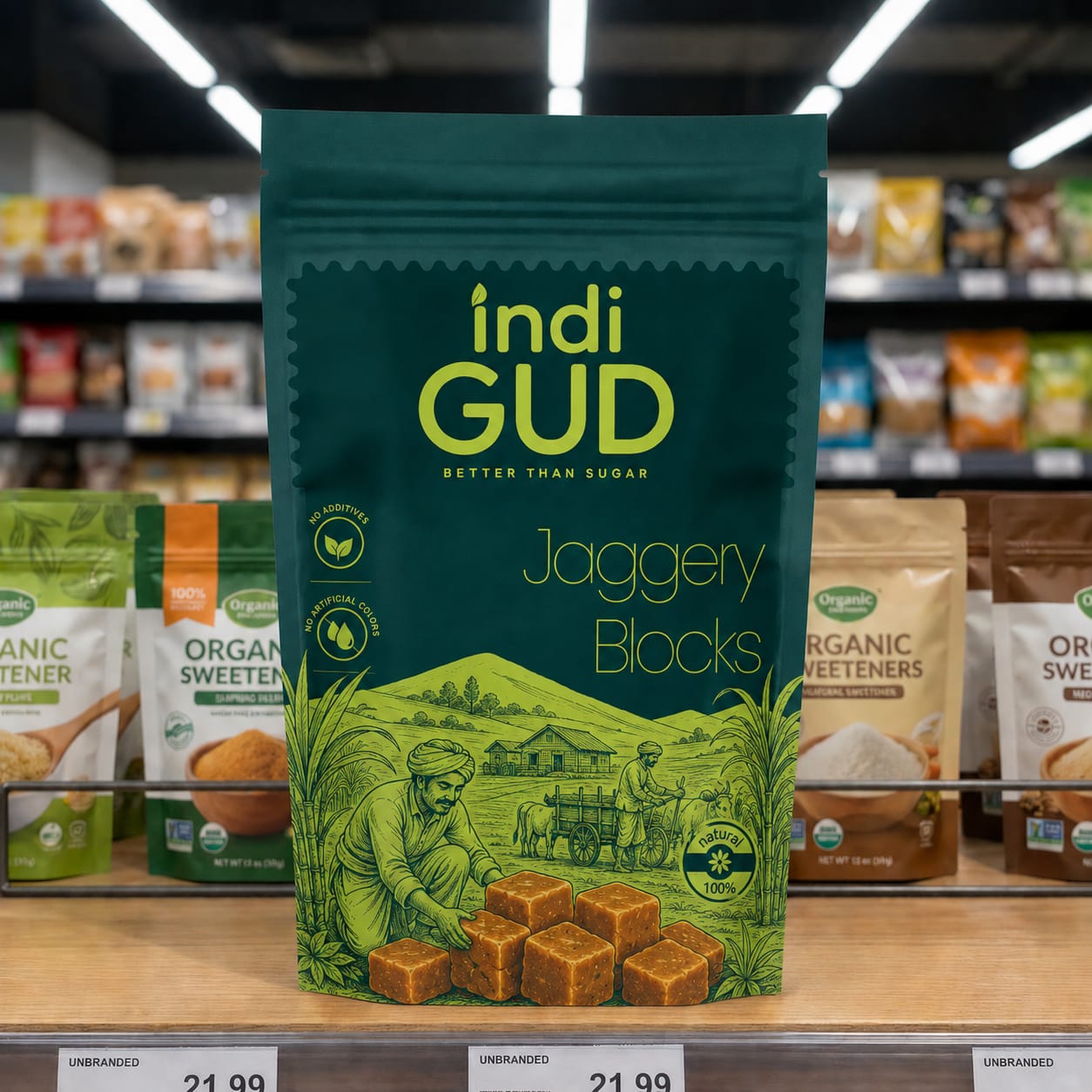
indiGUD Jaggery Blocks pouch
How it is made

Fourteen hours, start to finish.

Most of that is heat and patience. None of it is chemistry.

01

Harvest

Cane is cut at first light between November and March, when the sucrose in the stalk peaks.

02

Press

Crushed within hours of cutting. Juice that waits overnight ferments and never sets clean.

03

Clarify

Okra sap draws the impurities to the surface. They are skimmed off by hand, three or four times.

04

Reduce

Four hours over wood fire in a shallow iron pan until the juice darkens and thickens to a thread.

05

Set & Cut

Poured into wooden moulds to cool overnight, then cut into blocks — or dried and stone-milled to powder.

06

Pack

Batch-coded and sealed into resealable, food-grade pouches within the same week.

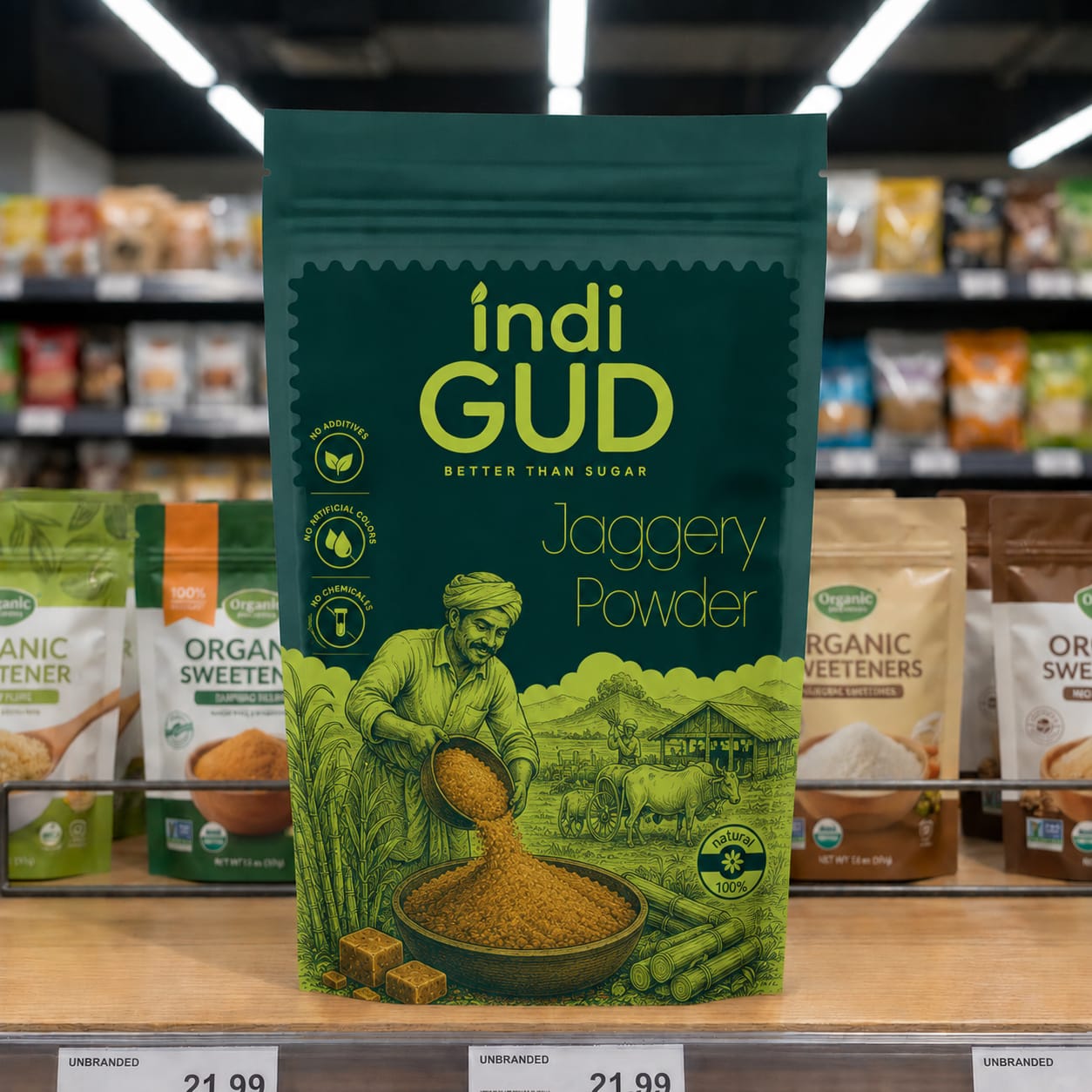
indiGUD Jaggery Powder pouch
The farms

Paid at the gate, on the day.

We work with forty-odd smallholder families across the Bijnor belt. They are paid a premium over the mandi rate, in cash, on the day of pressing — not thirty days later through three intermediaries.

In return we get first refusal on the best cane and a say in how it is processed: no sulphur, no hydros, open pans only. It costs us more per kilo. It is the entire reason the product tastes the way it does.

What we will never do

  • Add sulphur, hydros or any chemical whitener.
  • Use anti-caking agents to fake a free-flowing powder.
  • Blend in refined sugar to stretch a batch.
  • Buy through an aggregator who cannot name the farm.
The range

What we make.