Every family has one person who always has something in their pocket.
For a lot of us, it was nana. A shawl over the shoulders, a newspaper folded under one arm, and in the kurta pocket, a small paper puriya. You'd sit next to him and he'd open it without saying anything. Inside: a handful of roasted chana and a few pieces of gud. One chana, one tiny bite of gud. That was the snack. No wrapper, no brand, no list of ingredients you can't pronounce.
Most of us grew up and switched to biscuits and namkeen packets. But gud chana never really went away. Your local mandir still gives it as prasad. Some trains still have someone selling it in paper cones. And if you ask your parents what they ate between meals as kids, there's a good chance this is the answer.
Why it's worth bringing back
Let's be honest about why we reach for a biscuit packet at 5 pm. It's easy. It's in the drawer. It's sweet.
Gud chana is just as easy, and here's why it's the better thing to have in that drawer:
- Chana fills you up. Roasted chana is simply chickpeas, dry-roasted. It has real protein and fibre, so a small handful keeps you going until dinner. A biscuit is gone in a minute and you want three more.
- Gud is the cane, not a factory. Real gud is sugarcane juice boiled down in a kadhai. It keeps the cane's natural minerals and molasses, which is why it tastes like something, not just "sweet". White sugar is refined until all of that is gone.
- You know exactly what's in it. Two ingredients. Nothing to read on the back.
- It costs almost nothing. A kilo of roasted chana and a pack of gud will last a family for weeks.
It's also a lovely winter snack. A few pieces of gud chana with a cup of gud ki chai on a cold evening is about as cosy as it gets.
Two ways to eat it
The nana way: chana and gud, side by side. No cooking at all. Keep a jar of roasted chana and a small dabba of gud pieces on the shelf. Take a handful of chana, a small piece of gud, and eat them together. This is what most families did, and honestly, it's still great.
If your gud keeps turning rock-hard or sticky in the dabba, here's how to store it properly.
The candied way: gud wale chane. This is the version you see at fairs and outside temples, where every chana has a thin, crunchy gud coating. It takes about 15 minutes and one kadhai. The recipe card below has the exact steps, but here's what actually matters.
The one thing to get right: the syrup
Gud chana is easy, but there's one moment you can't skip: checking the syrup.
Melt the gud with a spoon of water and a little ghee on low heat. It will foam up and then turn into a shiny, bubbling syrup. Now take a small bowl of cold water and drop a little syrup in.
- If it sets hard and snaps between your fingers, it's ready. Turn off the heat.
- If it's soft and chewy, cook it for another 30 seconds and test again.
- If it smells burnt or bitter, the heat was too high. Sadly, start again. Burnt gud tastes burnt in every bite.
Undercooked syrup is the most common mistake. The chana come out sticky and clump together into one big ball, and they go soft in a day. Patience for one extra minute fixes it.
Once the syrup is ready, tip in the warm chana and stir fast. Keep stirring as it cools. At first it all looks like one sticky mass, and then, suddenly, the chana start separating into single crunchy pieces. That's the moment you know you've got it.
Which gud to use
Darker, sulphur-free gud makes the best gud chana. It has more flavour, and the coating comes out a deep golden brown instead of pale yellow.
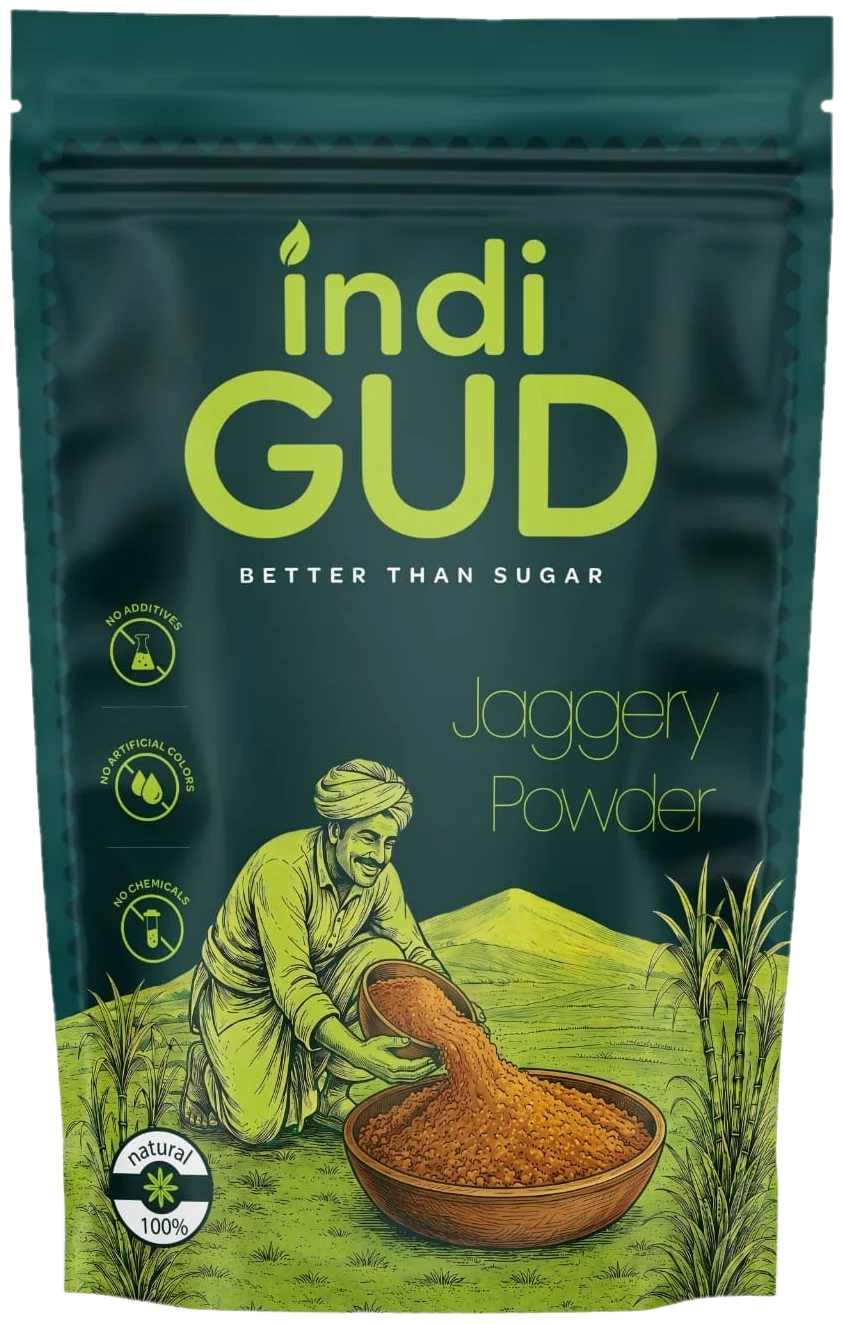
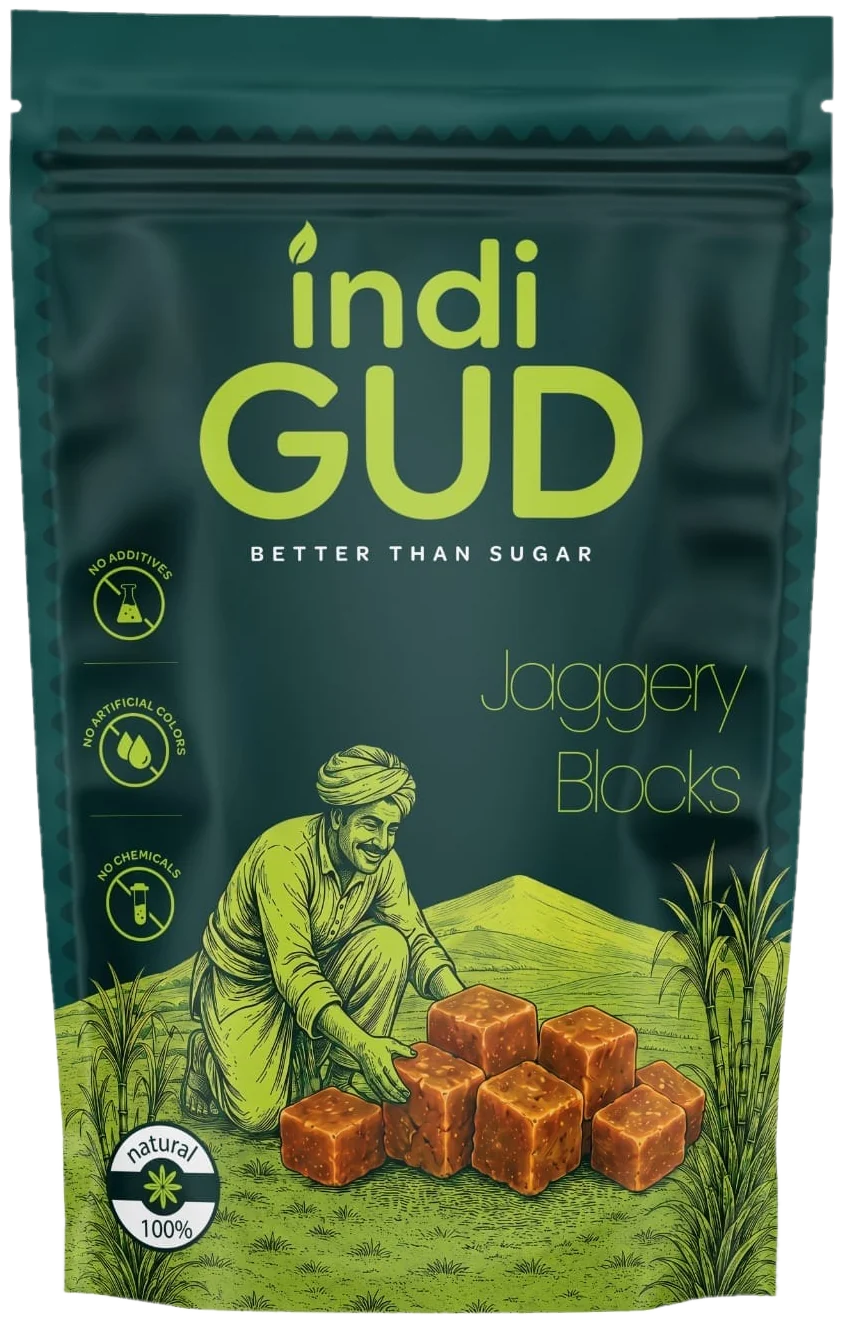
Gud blocks are the classic choice. Break them into small pieces first so they melt evenly. Jaggery powder melts the fastest and is the easiest if you're making this for the first time.
Not sure if the gud in your kitchen is the real thing? Here's how to tell good gud from bleached gud.
A few honest notes
- A handful is the right amount. It's a snack, not a meal. A small katori is plenty.
- If anyone at home has diabetes, check with their doctor before adding any sweet, gud included.
- Kids love it, but whole chana can be a choking risk for very small children. For toddlers, skip it or crush it first.
- Storage: in an airtight jar, candied gud chana stays crunchy for 2–3 weeks. If it goes a little soft in humid weather, warm it in a dry kadhai for a minute.
Put it back in the drawer
Next time you're about to buy another packet of biscuits for the 5 pm hunger, try this instead. Fill one jar with gud chana and put it where the biscuits used to be.
You might find the kids start asking for it. And one day, someone in your family might start carrying a little puriya of it in their pocket, just like nana did.