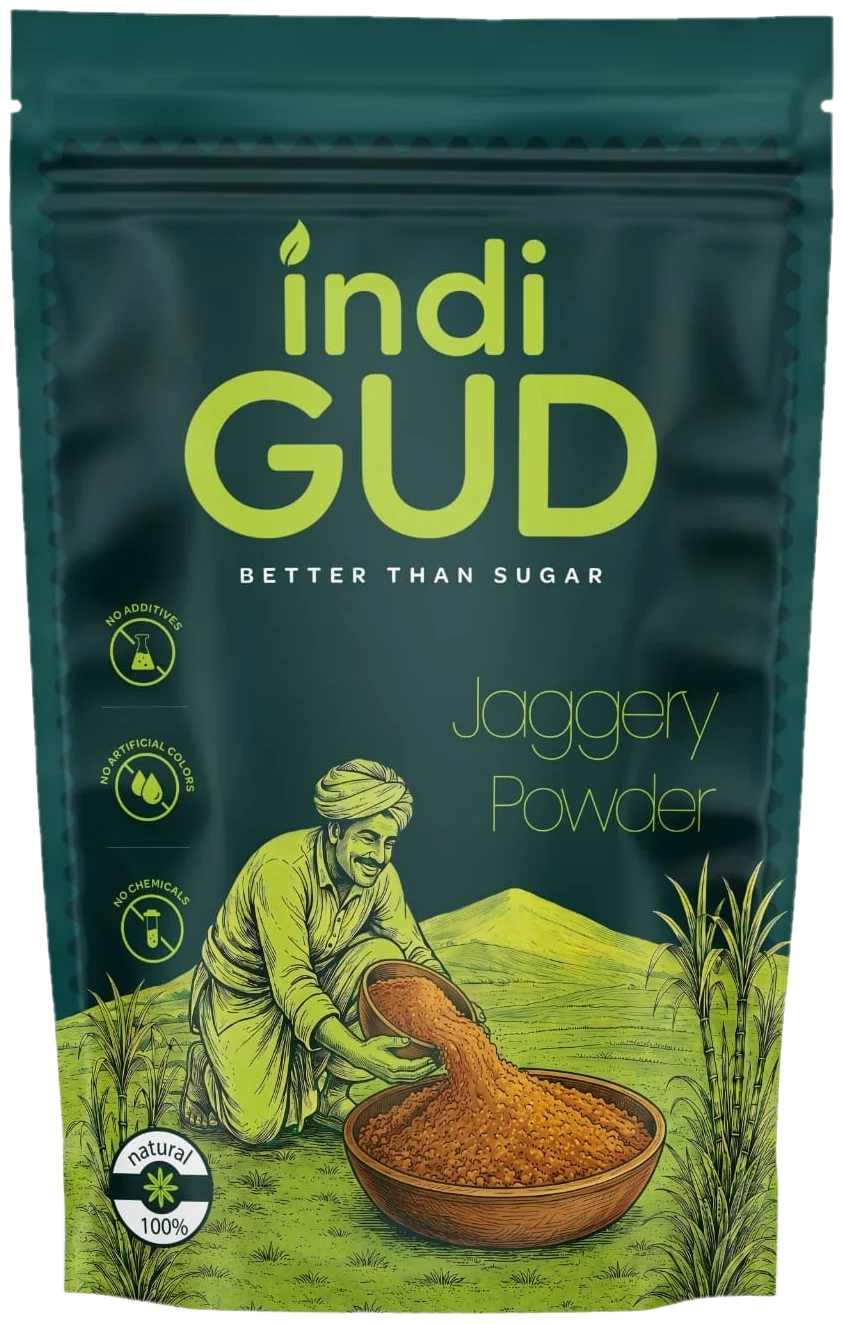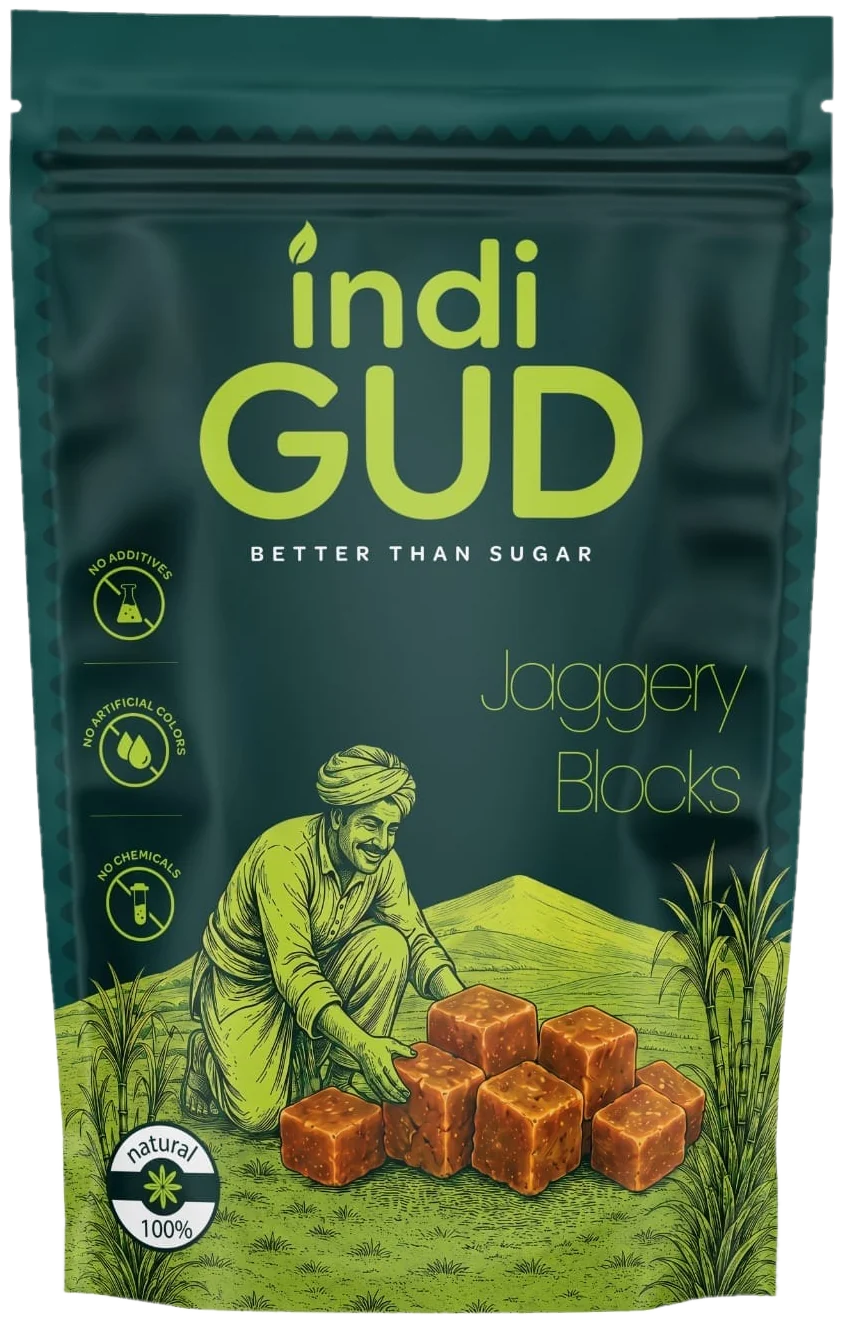
In almost every Indian home there is a gud dabba. It is never a dabba that was bought for gud. It used to be a Bournvita jar, or a steel tiffin missing its other two layers, or that blue Danish cookie tin that has not held a single cookie since 2009.
After dinner, it comes out. Dadaji takes "bas ek chhota sa tukda", and somehow his chhota sa tukda is always the biggest piece in the dabba. A guest arrives on a hot afternoon and gets a glass of water with a piece of gud on the side, because that is just how it is done. And at least one child in the house has been caught at midnight standing in front of the open dabba, pretending to look for something else.
The gud dabba is a small thing, but it is a very loved one. Which is why it is so annoying when the gud inside it misbehaves.
The two moods of gud
If you have kept gud for any length of time, you have seen both of these.
Winter gud turns into a rock. You need a knife, then a bigger knife, then the belan, and finally someone suggests the hammer from the toolbox. A piece flies off and lands under the fridge, where it stays until the next Diwali cleaning.
Monsoon gud goes the other way. It gets sticky, sweats, glues itself to the bottom of the dabba and attracts every ant within two kilometres. You open the lid and the ants look up at you like you are the one who is intruding.
Neither of these means your gud is bad. It means it is real. Gud is not refined, so it still holds on to a bit of moisture and pulls in more from the air. That is exactly why it behaves differently from white sugar, and also why a little care goes a long way.
Why it matters
Gud is something most families buy in bulk and use slowly, a bit in the chai, a bit in the dal, a piece after dinner. If it goes sticky or spoils halfway through the packet, that is money and good food thrown away. A few small habits keep the last piece as good as the first.
How to store gud so it stays happy
- Use an airtight jar. Glass or steel with a tight lid. Air, and the moisture in it, is the main enemy. The open-mouthed dabba with a loose lid is the reason most gud goes sticky.
- Always use a dry spoon. One wet spoon, straight from washing up, is enough to start a sticky patch. This applies doubly to jaggery powder, which clumps quickly once moisture gets in.
- Keep it away from the stove and the sink. Steam from cooking and water splashes are exactly what gud does not want. A cupboard on the other side of the kitchen is better than the shelf right above the gas.
- Break blocks into pieces before storing. Breaking gud blocks into small pieces on day one saves the hammer drama in winter.
- Keep a small jar for daily use. Fill a small jar for the week and keep the rest sealed. The big stock is opened less often and stays dry.
- In the monsoon, the fridge is fine. Keep the gud in an airtight box in the fridge during very humid months. When you take it out, let the closed box come to room temperature before opening, or water will form on the cold gud.
Rescuing gud that has gone wrong
Rock-hard gud: do not fight it. Grate it instead of cutting it. If you need it softer, keep the piece in a covered bowl over a pan of warm water for a few minutes. For chai or cooking, you can also melt it with a spoon of water on low heat.
Sticky or clumpy powder: if it smells normal, it is fine to use. Break up the lumps and spread it out on a dry plate for an hour in a dry room, then put it back in a clean, dry jar.
Ants: wipe the outside of the jar, check the lid fits, and keep the jar standing on a small plate with a bit of water around it if they are very determined. The ants will reconsider their life choices.
When to throw it away
Most gud that looks odd is still perfectly good. But do throw it out if:
- it smells sour, or a bit like alcohol, which means it has started to ferment
- you see fuzzy or white-green spots of mould
- it has gone wet and runny rather than just sticky
When in doubt, throw it out. Gud is not worth a stomach ache.
How long does gud last?
Stored well, a long time. Our jaggery powder is good for 12 months from packing, and our blocks for 18 months. The date is printed on every pack. In most homes, the after-dinner tukda makes sure it never gets anywhere close.
So go and find your gud dabba. If it is a Bournvita jar with a lid that does not quite shut, maybe today is the day it finally gets an upgrade.